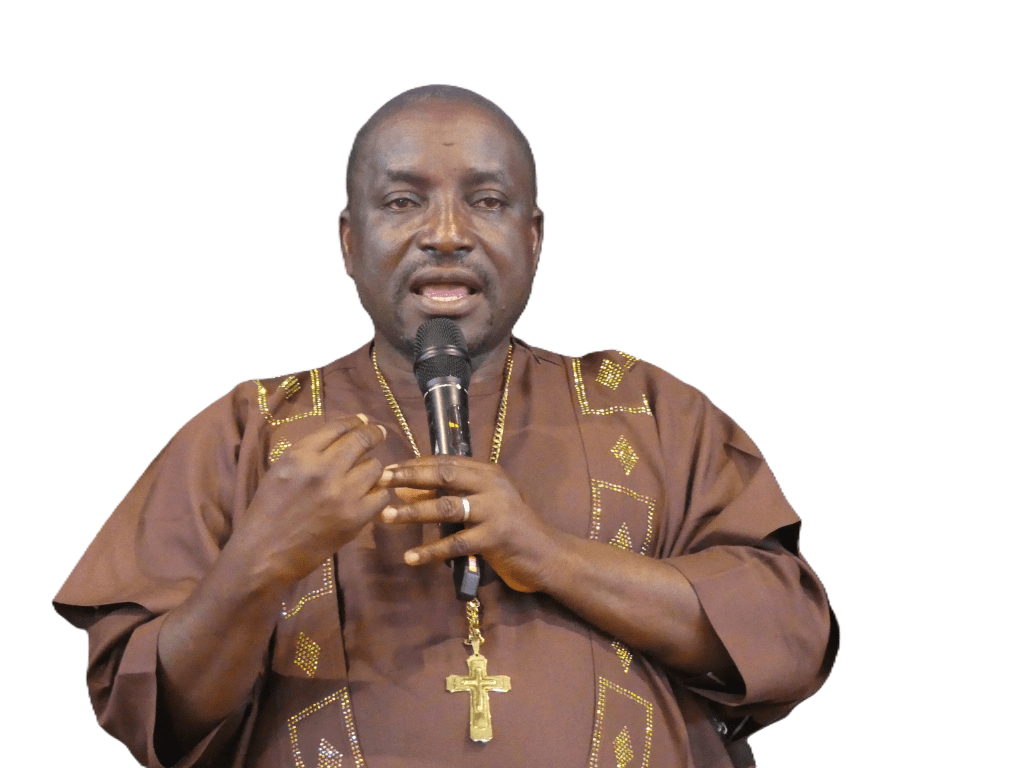
Bishop Dr. Ayuba Matawal
To establish a solid foundation for thriving in this world means developing the essential skills, habits, values, and mindset that support long-term success, stability, and well-being, no matter what life brings your way. It’s like laying down strong roots so you can grow steadily, face challenges with resilience, and make meaningful progress toward your goals.
You cannot thrive in isolation—there must be something solid to stand on. You cannot be idle and expect to make a difference in life; there must be something you actively engage in.
Then God said, “Let Us make man in Our image, according to Our likeness; let them have dominion over the fish of the sea, over the birds of the air, and over the cattle, over all the earth and over every creeping thing that creeps on the earth.” —Genesis 1:26 (NKJV)
When God made man, He created him in His image and gave him a purpose—to care for all that He had created. God provided everything man would need before placing him in the world to take charge. The scripture says, “let them have,” indicating God’s intention that humanity would multiply and, together, have dominion over His creation.
DIVINE UNDERSTANDING
To thrive and achieve outstanding, lasting results, you must understand two key levels of covenant:
- Covenant Relationship
- Covenant Assignment
COVENANT RELATIONSHIP
This is a two-way relationship: a covenant with God and relationships with people whom God has divinely assigned to your life. Every person God has used meaningfully has maintained a strong covenant relationship with Him.
A covenant relationship is a sacred, binding agreement based on mutual commitment, trust, and loyalty, often established with or before God. Unlike a contract, which is transactional, a covenant is relational—rooted in love and faithfulness, not performance. In our covenant relationship with God, He maintains the covenant, while our responsibility is to trust, obey, and follow His guidance.
When God wants to accomplish something on earth, He first looks for a person. This is because He has ordained the earth to be man’s domain:
“The heaven, even the heavens, are the LORD’s; but the earth He has given to the children of men.” —Psalm 115:16 (NKJV)
God entrusted the earth to humans to govern and steward. When He desires to act on earth, He finds someone willing to trust Him, chosen by His grace, and enters into a covenant relationship with them to carry out His divine intent. Often, people may not visibly see God, but the individual being used knows it is God working through them.
The success of that person hinges on their relationship with God. God provides all the resources; the individual’s responsibility is to remain connected. This covenant relationship is what makes a person truly relevant, because they are connected to the Creator of heaven and earth. Everything exists through Him.
COVENANT ASSIGNMENT
A covenant assignment is a specific, divinely-given responsibility, calling, or purpose entrusted by God as part of the covenant relationship. It transcends ordinary duty and involves a deep, ongoing partnership with God to fulfill His will.
In biblical terms, these assignments are not merely tasks but callings that demand obedience and faithfulness. They often span a lifetime and shape a person’s identity and direction, aligning them with God’s broader purposes.
Covenant assignments are:
- God-given
- Purpose-driven
- Relational
- Long-term in nature
They reflect God’s promises and kingdom agenda. These assignments are not temporary roles but become central to a person’s role in the world. They demand trust in God’s direction and constant communion with Him.
Ultimately, a covenant assignment is about partnering with God to accomplish work with eternal significance. God does not entrust eternal purposes to those without a genuine covenant relationship with Him.
God begins by establishing a relationship with a person and then entrusts them with a divine assignment. His highest desire is relationship—not just the fulfillment of tasks. A person’s success is rooted in the relationship they cultivate with God.
When God created humanity, His greatest desire was daily communion and fellowship. When man failed, God immediately began the process of restoring that broken relationship.
In the following sections, we will explore the lives of several individuals who had covenant relationships and assignments with God—and how they left a lasting mark on history.
Abraham: The Friend of God and Father of Faith
Walking in Obedience and Trust Through Covenant with God
Abram was an idol worshiper when God set His eyes on him. God chose him because He intended to raise a nation and establish a system through which His eternal purpose would be fulfilled on the earth. God visited Abram and instructed him to separate from his family, promising to make him into a great nation. He told him He would bless him, make him a blessing, and that through him all the families of the earth would be blessed.
At that time, Abram was 75 years old and had no child when God made this profound covenant with him. How could a man without a child become a nation? This is where the sovereignty of God is revealed. Abram entered into a covenant relationship with God. God then changed his name to Abraham, meaning “father of nations,” even though he remained childless and his wife’s body was as good as dead.
In Genesis chapter 15, we see God speaking to Abraham and giving Himself as the reward—not merely giving a reward, but being the reward. God called Abraham to walk before Him and be blameless. When it becomes less about material things and more about God Himself, everything changes. God initiated a covenant: Abraham brought the sacrificial elements, and God passed through them, declaring promises about Abraham’s future. Then came the pivotal verse:
“And he believed in the LORD, and He accounted it to him for righteousness.” — Genesis 15:6
By believing God, Abraham was declared righteous. This reflects the New Testament principle: righteousness is not by works, but by faith in the finished work of Christ.
Abraham became the father of faith—not only to his physical descendants but to all who believe in Jesus Christ. Every Christian is a spiritual child of Abraham by faith. God changed his story from Abram to Abraham, and He kept His promises. He gave his descendants the land He had promised, and they became a blessing to the whole world.
The entire world now traces its spiritual foundation back to this covenant relationship that God initiated with Abraham. It all began when God took hold of one man and gave him a divine assignment.
Joseph: From the Pit to the Palace Through God’s Providence
Preserving Destiny Through Purity, Wisdom, and Covenant Faithfulness
The man Joseph, the great-grandson of Abraham, was the one God used to connect the prophetic word He gave Abraham when He made a covenant with him. God had told Abraham that his children would be strangers in a foreign land, but that they would eventually come out and return to the promised land. The reason for taking them to that land was to create an atmosphere where they would multiply, and from there, a law and a constitution would be given to govern them.
God found Joseph, the 11th son of Jacob, fit for this assignment. But He needed to establish a covenant relationship with him.
God visited Joseph and revealed his assignment to him. Joseph grew up under his father and learned to hold on to God, to the extent that he stood for God in a foreign land, where he was likely the only believer in God. He did not fall into sin in that foreign land. He chose to go to prison rather than sin against God.
“There is no one greater in this house than I, nor has he kept back anything from me but you, because you are his wife. How then can I do this great wickedness, and sin against God?” — Genesis 39:9
He didn’t hold the evil his brothers did to him against them when they sold him into Egypt. Despite his painful story in the process of fulfilling his assignment, he chose forgiveness. He told them:
“Do not be afraid, for am I in the place of God? But as for you, you meant evil against me; but God meant it for good, in order to bring it about as it is this day, to save many people alive. Now therefore, do not be afraid; I will provide for you and your little ones.” — Genesis 50:19–21
One thing is obvious and consistent throughout his life—the presence of God was with him:
- In Potiphar’s house where he served as a slave, the Lord was with him, and he became a successful man.
“The LORD was with Joseph, and he was a successful man; and he was in the house of his master the Egyptian.” — Genesis 39:2 (NKJV)
- In prison, after being falsely accused, the Lord showed him mercy and gave him favor. He was given authority even in prison, and whatever he did prospered because the Lord was with him.
“But the LORD was with Joseph and showed him mercy, and He gave him favor in the sight of the keeper of the prison… because the LORD was with him; and whatever he did, the LORD made it prosper.” — Genesis 39:21–23 (NKJV)
- Stephen referred to God’s presence with Joseph in the New Testament, explaining how that presence opened the door of mercy and favor in the sight of Pharaoh, leading to Joseph being appointed Prime Minister of Egypt.
“But God was with him and delivered him out of all his troubles, and gave him favor and wisdom in the presence of Pharaoh, king of Egypt; and he made him governor over Egypt and all his house.” — Acts 7:9–10 (NKJV)
When Jesus gave the Great Commission, one of His key promises was the assurance of His presence:
“…I am with you always, even to the end of the age.” — Matthew 28:20
We can lose anything in life or ministry—but not His presence.
Daniel and His Friends
Daniel and his friends were people who, from the very beginning, made it clear that they had a covenant relationship with God and were fully committed to carrying out their covenant assignment, no matter the situation they found themselves in. They knew what they wanted.
They made up their minds not to compromise their standard. They chose to remain different from others by refusing to defile themselves, maintaining their covenant relationship with God.
“But Daniel purposed in his heart that he would not defile himself with the portion of the king’s delicacies, nor with the wine which he drank; therefore he requested of the chief of the eunuchs that he might not defile himself.” — Daniel 1:8
They became better than those who ate the king’s food and missed God’s presence. They were ten times better than all their peers, with extra blessings from the Lord:
“As for these four young men, God gave them knowledge and skill in all literature and wisdom; and Daniel had understanding in all visions and dreams.” — Daniel 1:17
They chose death over bowing to another god. Even with the threat of the fiery furnace, the three Hebrew boys refused to bow. They declared that their God could deliver them—but even if He didn’t, they still would not bow:
“Our God whom we serve is able to deliver us… But if not, let it be known, O king, that we do not serve your gods, nor will we worship the gold image.” — Daniel 3:17–18 (NKJV)
The Lord Jesus Himself joined them in the fire and kept them safe and untouched.
Even when the king signed a death warrant against anyone who prayed to any god besides himself (a trap set by Daniel’s enemies), Daniel was not shaken. For him, God’s presence and prayer were worth more than life itself. He continued his custom of praying toward Jerusalem.
Though the plan worked and Daniel was thrown into the lions’ den, the lions could not harm him. God, whom he served, sent His angel to shut the lions’ mouths. Daniel came out untouched, and the tables turned—his enemies, along with their families, were thrown to the lions instead.
No wonder Daniel said:
“…the people who know their God shall be strong, and carry out great exploits.” — Daniel 11:32
Moses: A Covenant Man Who Walked with the InvisibleMoses: The Deliverer Who Walked Face-to-Face with God
Fulfilling Divine Assignment Through Intimacy with the Invisible
“By faith Moses, when he was born, was hidden three months by his parents, because they saw he was a beautiful child; and they were not afraid of the king’s command. By faith Moses, when he became of age, refused to be called the son of Pharaoh’s daughter, choosing rather to suffer affliction with the people of God than to enjoy the passing pleasures of sin, esteeming the reproach of Christ greater riches than the treasures in Egypt; for he looked to the reward. By faith he forsook Egypt, not fearing the wrath of the king; for he endured as seeing Him who is invisible.”
— Hebrews 11:23–27 (NKJV)
Moses is one of the greatest leaders in history, not just because he confronted Pharaoh—the most powerful ruler of his time—but because of his covenant relationship with the living God. His greatness was not rooted in strategy or strength, but in intimacy with God.
God’s Friend and Prophet
Moses had such a deep relationship with God that Scripture records:
“So the LORD spoke to Moses face to face, as a man speaks to his friend.” — Exodus 33:11 (NKJV)
Unlike other prophets to whom God revealed Himself through dreams and visions, Moses saw and heard God clearly and directly:
“If there is a prophet among you, I, the LORD, make Myself known to him in a vision… Not so with My servant Moses; he is faithful in all My house. I speak with him face to face, even plainly, and not in dark sayings; and he sees the form of the LORD.”
— Numbers 12:6–8
The book of Deuteronomy 34:10–12 also affirms that there has never been another prophet like Moses, whom the Lord knew face to face.
His Covenant Began with Faith
The journey of Moses began with the faith of his parents. They saw something special in their child and were not afraid of the king’s deadly command. Parents today can learn from this—when we see the hand of God on our children, we must partner with God in protecting and nurturing their destiny.
When Moses came of age, having been secretly raised by his own mother in Pharaoh’s palace, he made a radical choice. He refused to be called the son of Pharaoh’s daughter. While many would have longed for the privilege and power of royalty, Moses rejected it. To say “yes” to God, he had to say “no” to Egypt. We too must learn to reject what seems like an advantage if it will hinder our destiny in God.
What wisdom—God allowed the deliverer of Israel to grow up in the very house of his enemies. He learned their systems, language, and power structure—only to one day confront and overcome them with the power of God.
Choosing Affliction Over Pleasure
Moses deliberately chose to suffer affliction with the people of God rather than enjoy the passing pleasures of sin. Only someone who has seen purpose can make such a decision. He considered the reproach of Christ to be more valuable than all the treasures of Egypt. Egypt was the superpower of the ancient world—wealthy, advanced, and powerful. Yet Moses chose disgrace over gold, calling it “greater riches.”
What kind of man makes such a choice? A man who has seen the Invisible.
Walking with the Invisible God
How do you see what cannot be seen? Not with physical eyes, but with the eyes of faith—the eyes of the spirit, enlightened by the Word and the Spirit of God. God is Spirit, and He communicates Spirit to spirit. When a man has seen the Invisible, earthly greatness becomes nothing in comparison. Such a man lives by a different reality.
Moses was able to carry out his difficult assignment because he walked with the Invisible God. He knew Pharaoh’s might, the strength of Egypt, and the difficulty of convincing a people who had been enslaved for over 400 years. His first question to God was:
“What is Your name? What will I say to the people?”
He knew it wasn’t enough that God was willing—the people also needed to be willing to come out of bondage. But once Moses surrendered fully to God, every part of his life became a vessel for miracles—even his rod.
The Rod of God
When Moses threw his rod on the ground, it became a serpent. Why? Because Egypt was symbolized by the serpent; Pharaoh even wore a cobra on his crown. The Egyptian magicians did the same, but Moses’ serpent swallowed theirs. He picked it up again and it became a rod—his rod, now empowered by God, having swallowed the strength of Egypt. That day, the magicians lost their rods. God was judging the gods of Egypt.
Miracle after miracle followed, because Moses remained faithful to his covenant relationship with God.
A Man of Worship and Revelation
The Psalms Moses wrote reflect the depth of his walk with God:
- “Lord, You have been our dwelling place in all generations…” — Psalm 90:1–2
- “He who dwells in the secret place of the Most High shall abide under the shadow of the Almighty.” — Psalm 91:1
From Psalm 90 to 106, many of these are attributed to Moses. They show a man who did not just know about God—but knew Him.
No wonder he could go up a mountain to meet God and never return. To lead more than 2.5 million people through a wilderness, you must have a relationship with the Invisible.
The Lord Jesus: Our Perfect Example
From His birth to His resurrection, the life of the Lord Jesus Christ was defined by the presence and power of God. Though He was fully God, He took on human flesh and lived on earth as a man, fully submitted to the will of the Father. He demonstrated what it means to walk in a covenant relationship with God.
At His baptism, the heavens opened, the Father spoke, and the Holy Spirit descended on Him like a dove. This moment wasn’t just symbolic—it was the public confirmation of a divine connection He faithfully maintained throughout His earthly life.
One powerful example of this covenant lifestyle is found in John 7:53–8:2:
“And everyone went to his own house. But Jesus went to the Mount of Olives. Now early in the morning He came again into the temple…”
While others went home to rest, Jesus went to the Mount of Olives—to pray. When everyone was waking up, Jesus was already returning from the place of communion with the Father. This was His lifestyle.
Look again at John 11:41–42, at the tomb of Lazarus:
“Father, I thank You that You have heard Me. And I know that You always hear Me…”
He didn’t need a dramatic prayer session at the grave because He had already done the praying. His relationship with the Father gave Him calmness, confidence, and power.
Jesus also taught us about secret prayer:
“But you, when you pray, go into your room, and when you have shut your door, pray to your Father who is in the secret place…” — Matthew 6:6
The secret place is where real intimacy happens. Just as intimacy between a husband and wife is private—but the result (a child) is seen publicly—so it is with God. When you cultivate intimacy in secret, the results will be seen in the open.
Apostle Paul: A Man Arrested by Purpose
Once a persecutor of the church, Paul’s life changed forever when he encountered Jesus on the road to Damascus. His transformation was radical and immediate:
“But when it pleased God… to reveal His Son in me… I did not immediately confer with flesh and blood, nor did I go up to Jerusalem… but I went to Arabia…” — Galatians 1:15–17
Instead of seeking approval from men, Paul went into the wilderness of Arabia to build a covenant relationship with Jesus. He believed he was set apart from birth for this calling. For three years, he sought God, not people. That’s why he became one of the most powerful voices of the gospel.
His hunger for God was relentless:
“…caught up into Paradise and heard inexpressible words…” — 2 Corinthians 12:4
He received revelations so deep they were beyond human expression. No wonder he wrote over half the New Testament and laid the doctrinal foundation of the church. His covenant relationship enabled him to fulfill his divine assignment.
Apostle Peter: Revelation Through the Spirit
Peter’s life was marked by deep spiritual encounters. His breakthrough came when he received a revelation from heaven:
“You are the Christ, the Son of the living God.”
Jesus answered, “Flesh and blood has not revealed this to you, but My Father who is in heaven.” — Matthew 16:16–17
Peter tapped into the Spirit and received insight no human could have given. He was entrusted with leadership and became a key figure in the early church.
He witnessed divine moments like the Transfiguration, where he saw Jesus speak with Moses and Elijah and heard the voice of God from heaven.
Peter later wrote:
“His divine power has given to us all things that pertain to life and godliness, through the knowledge of Him… that through these you may be partakers of the divine nature…” — 2 Peter 1:2–4
Knowing Jesus intimately gives us everything we need to live in power and purpose. Through His promises, we become partakers of His divine nature.
Apostle John: Eyewitness of Glory
John’s writings reflect his deep, personal connection with Christ. He testifies in 1 John 1:1–4:
“That which was from the beginning… which we have heard, which we have seen with our eyes, which we have looked upon, and our hands have handled, concerning the Word of life…”
John didn’t hear about Jesus—he walked with Him, touched Him, and witnessed His glory. His message is simple but profound: Fellowship with Jesus leads to eternal life.
Transformed by the Glory
Paul, by the Spirit, gave us this incredible truth:
“But we all, with unveiled face, beholding as in a mirror the glory of the Lord, are being transformed into the same image…” — 2 Corinthians 3:18
As we keep beholding Christ, we are transformed into His likeness—from glory to glory—by the power of the Spirit.
Conclusion: A Call to Covenant Intimacy
The secret of greatness in the Kingdom is not talent, title, or popularity. It is deep covenant relationship with God. From Moses to Jesus, from Paul to Peter and John, every man of divine assignment walked in intimacy with the Lord.
Let us return to the secret place. Let us shut the door, seek His face, and build intimacy with the Father. That’s where power flows from. That’s where purpose is discovered. That’s where transformation happens.
In private with God, but revealed in power to the world.
 Bishop Dr. Ayuba Matawal
Leave a comment